How Allatyme’s Artists Were Created
Allatyme Music Group was built at the intersection of storytelling, technology, and intention.
In 2026, I set out to answer a simple question:
What if artists could be developed without waiting for permission—from labels, budgets, or gatekeepers—while still honoring identity, narrative, and craft?
The result is Allatyme’s first generation of digital artist avatars.
The Tools, Used Deliberately
Each Allatyme artist was created using a stack of modern creative tools, combined with human direction, authorship, and editorial control.
- GPT was used to help shape:
- Artist names
- Narrative backstories
- Lyrical concepts
- Voice tone and persona continuity
- Suno was used to prototype:
- Song demos
- Vocal styles
- Genre exploration
- Emotional range
- Google AI Studio was used to develop:
- Visual concepts
- Character consistency
- Digital performance aesthetics
- Content variations for media platforms
These tools were not used to “replace artists,” but to design artists intentionally—from the ground up.
Every output was curated, rewritten, refined, and approved.
Nothing was automated blindly.
Nothing was left without authorship.
Names, Stories, and Identity
Every Allatyme artist has:
- A name
- A genre identity
- A distinct tone
- A backstory
- A visual language
- A creative direction
They are not generic voices.
They are designed characters, developed with the same care traditionally given to branding, A&R, and artist development—only faster, leaner, and without industry bottlenecks.
Each artist exists as:
- A digital performer
- A content engine
- A narrative identity
- A flexible media presence
This allows them to:
- Release music
- Appear in visuals
- Host podcasts
- Participate in brand collaborations
- Anchor entire content verticals
Why Digital Artists
Allatyme was never meant to follow the old music industry model.
Traditional pipelines are slow, expensive, and exclusionary.
They rely on scarcity, not creativity.
Digital artists allow Allatyme to:
- Build worlds before waiting on logistics
- Test sound and visuals rapidly
- Develop multiple genres in parallel
- Create consistent content across platforms
- Tell long-form stories without interruption
Most importantly, it allows creative ownership to stay centralized and intentional.
How It Became Allatyme Music Group
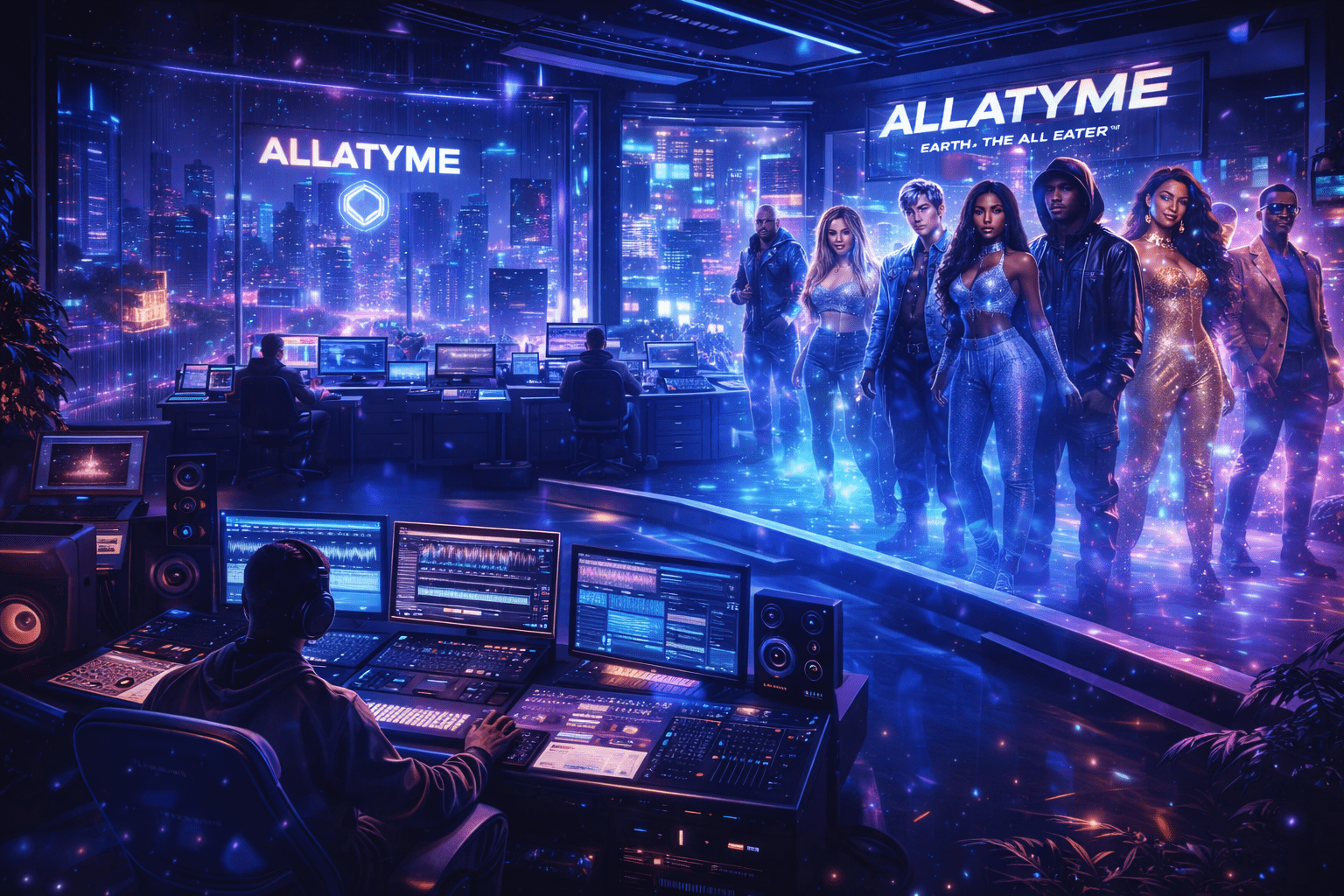
As the roster grew—across Rap, R&B, Pop, Rock, Electronic, Afrobeats, Amapiano, Latin, and K-Pop—it became clear this wasn’t a collection of experiments.
It was a label.
Allatyme Music Group was formed to house:
- The artists
- The content
- The intellectual property
- The platforms
- The long-term vision
By 2026, Allatyme had evolved into a digital-first music group, designed for a world where music is not just heard—but experienced across media.
The Bigger Picture
These artists are not meant to replace human musicians.
They exist to:
- Expand what a music group can be
- Create scalable digital content
- Explore sound without limits
- Build culture without waiting
Allatyme is proof that music, identity, and technology can coexist—without losing soul, authorship, or direction.
This is not the end of artists.
It’s a new beginning for how artists are created, developed, and shared.
There are no comments